Saturday, March 6, 2021

Can't Stop Wondering Just What You Got

Thursday, it was sorta leaked that there would be a new Historic Anthology. Friday the cards were announced. Next Thursday, March 11th, the cards go live on Arena. Let's check them out.


I don't think any of these cards will be big players. There's a lot of duds in this Anthology. I think that's actually a good thing. I see a lot of posts on Reddit and whatever about what your Historic Anthology wish list would be, and lots of people write in stuff like Lightning Bolt and Path to Exile and even stuff like Wasteland. My opinion is that Historic is good the way it is. I don't want a ton of changes. Little new toys to play with are cool, but I'm having a good time as is. If it ain't broke.


What's funny about Coldsteel Heart is that it's a mana rock that's bad with Forsaken Monument. That said, most of the Mind Stone decks in the format are single colored, since Mind Stone et al only add colorless mana. That doesn't have to be the case anymore. Coldsteel Heart is the closest thing to Farseek we have, so if we ever want to go towards a Farseek style Jund deck a la INN/RTR Standard, now is the time. And it's colorless too, so it's probably even a better card than Farseek, but that probably depends a lot on context. I think this card will be good in Grixis control.


Maybe it's a little weak, but Think Twice always impressed me when it was in Standard, and I've seen it do some good work in Modern as well. Granted, Modern five years ago was kind of a different animal, but this is a lot more useful than it looks. I think that one thing that keeps UW Control in check in Historic is that there aren't that many good two mana instants to use with Teferi when you cast him on your fifth turn. Think Twice isn't going to change that by itself, but it's a start.


I feel like Wizards really didn't want to shake things up in Historic too badly, because this is definitely the worst of the swords. It's great on cheap utility creatures, since you will often have leftover mana dorks lying around to either equip or use to cast it quickly. It gives you a bunch of staying power and value. However, Collected Company does all those things too, and this is a miss with Company, so it's gonna be tough for it to find a home. Maybe it's a sideboard card.


This card saw a lot of play in Standard, but it's exactly the type of card we like playing against. We are in the market for two-for-oneing our opponent at every opportunity. The key is to have cheap creatures, so that you aren't losing a bunch of mana on the exchange, and that the cards you draw off your clue are castable the turn you crack it. For now I think that Baffling End is better, but if it picks up in usage we might want to just have it in mind when deckbuilding.


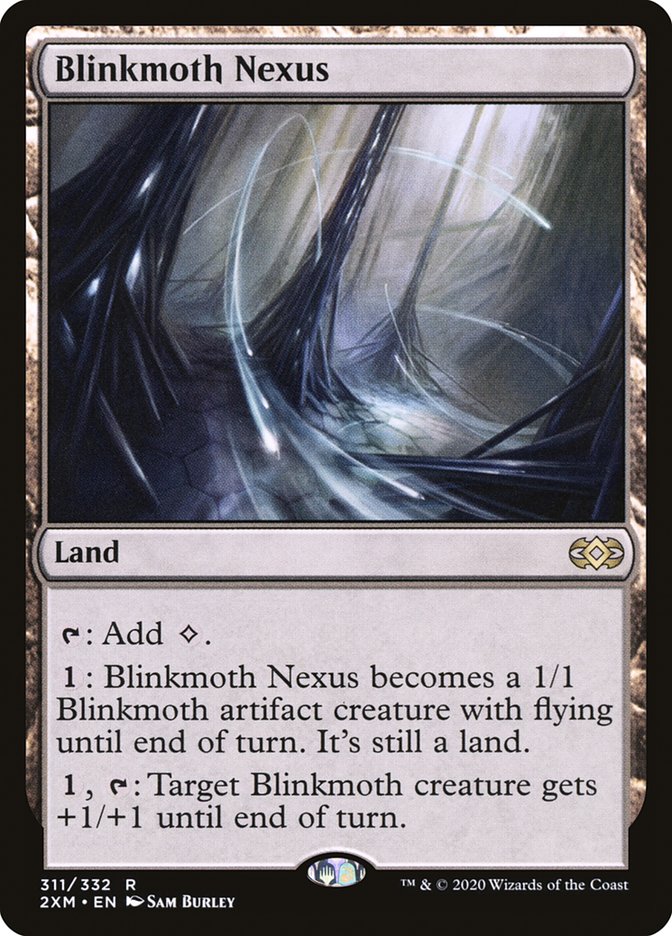
It's possible that there's a Tempered Steel deck out there that just needed Blinkmoth Nexus to become viable. If that's the case, then it'll be really good there. Bonesplitter is a card that puts out a lot of damage really quickly for not much mana. It might have a home in an artifact-based creature deck as well.


I think this is subtly the best card of the bunch. It's going to make the Company decks a lot more consistent. You can't play all three drop creatures, but you also need to make sure that when you hit your cheap stuff off Company they are impactful. Inspector does that really well, plus it basically cycles in the late game when you're digging for more Companys. Also, it might be the piece that was missing for Toolcraft Examplar to see more play. Bonesplitter does that too.


Shadow loses a lot by not having Fetchlands in the format. First is that they make you lose 1 life, but they also give you more control over your life total. You can take just one damage if you want, or three damage. Historic also doesn't have Street Wraith or any Phyrexian Mana stuff, which is another knock. Additionally, Historic does have a lot of the answers to Death's Shadow, like Fatal Push, Bloodchief's Thirst, and Skyclave Apparition. What Historic does have, though, is Lurrus. Death's Shadow can pretty easily slot in to Rakdos Arcanist, since Scourge of Skyclave was already seeing some play and doing okay.

~

That just about covers it. Really not a huge shake up, just a few cards that might see some play but won't turn the metagame on its head or anything. That's probably for the best. Don't go on Reddit and ask Wizards to put Wasteland in Historic please. I'm more interested in Strixhaven than anything else, but we're also supposed to getting Pioneer Remastered somewhere down the line. Anyways, I just put a new video on Youtube and you can check it out here. Thanks for reading.

Wednesday, February 24, 2021

Every Damn Thing But The Jailhouse Keys: Land

The mana base in a deck like Historic Jund Midrange is critical and takes time to get just right. Because we're a deck without any sort of a nut draw, our best way to win, on a macro scale, is by being consistent. That's hard to do when our game plan revolves around disrupting our opponent, meaning we have to have the right piece of disruption at the right time. There's only so much of that you control, hence what people like to call the "drew the wrong half of my deck" syndrome decks like these have. What we do have control over, though, is being able to cut back against the inherent randomness in the game's rules. We don't need to have a nut draw, we just want a hand that can function. Being able to at least play magic closer to 100% of the time will result in free wins, because your opponent's deck usually doesn't have that same quality.

In order to make this happen, Jund wants to have easy to cast spells, lots of color fixing, and a high enough land count to make sure we have mana to deploy our stuff on time. But we also need to make sure we aren't getting flooded. This is why utility lands are so crucial in a deck like this, we want lots of lands, but that cuts both ways.

So the land choices we make for this deck are a balancing act of fixing, utility, and pain-free curve-out enabling. It's not just the number of lands but the exact choices of lands that need to be right.

Usually Black is the most important color to have early in this deck, be it Standard, Modern, Historic, or Legacy. The shocklands are widely considered to be the best lands in the format, but I find that you don't want to play all 12, due to the damage you take. In this particular deck, these lands also have the added bonus of making Castle Locthwain enter untapped, which Stomping Ground does not.


Overgrown Tomb and Blood Crypt are pretty much always going to be four-ofs, but for Stomping Ground, anywhere between 0 and 4 is going to be right depending on what's going on in the format. If your life total isn't that important but making your Rootbound Crags enter untapped is, then Stomping Ground looks a little better. I think I currently have one in my deck, but that's always fluctuating. Like I mentioned, black being the most important color early means that you only need a few Red-Green lands, so you can cut these and play something else if you want.


The checklands and the shocklands play off each other really well, but we also want to be prepared for the times when you don't have a shockland in your opener. I've started to cut back my checkland count when new options have become available, like the Pathways and Blooming Marsh. A hand of Castle Locthwain and two Rootbound Crags is probably a mulligan, but a hand of Castle Locthwain, Rootbound Crag, and Cragcrown Pathway is likely a keep and a pretty solid hand. It's Magic, you can only "depend on" the deck working correctly so much.


Having said all that, Rootbound Crag is the land I'm most interested in having be my checkland of choice, mostly because it's the color combo not represented in the shocklands. Also, the need for Woodland Cemetery and Dragonskull Summit has gone down since the printings of Blooming Marsh and Canyon Slough.


I love Canyon Slough because it does everything we want. It makes our checklands (including Castle Locthwain) enter untapped, it adds two colors of mana, and it cycles when we don't need it anymore. It's nice that it's black and red that cycles, since you kind of want all the green mana you can get for Scavenging Ooze, but excess black and red we can throw away. I think that for this reason, I like Canyon Slough much better than Sheltered Thicket, and the deck can only take so many lands that unconditionally enter tapped. If it weren't for Canyon Slough, we would probably be playing all twelve shocklands, so it's a welcome addition to be able to turn on our lands and let us curve out and also mitigate flood.


The thing about Blooming Marsh is that it's a dual land and adds black on turn one, without making you take damage. Black on turn one is important for casting Thoughtseize and Bloodchief's Thirst, the only one mana spells in the deck, so on turns one through three it doesn't really get any better than this. The big questions, like with Pathways as we'll see later, is whether or not it's worth it to play non-checkland lands. I think that the answer is yes, because making sure your lands enter untapped on turn two or three is probably the most important time of the game. Two or three is what most of our spells cost, and also is when our opponents start casting some heavy hitter creatures that we want to keep pace with. Having Rootbound Crags with no shocklands to activate them will set you behind in these most crucial of turns. The shockland/checkland combo is great when it works, but we might be better off if we can back off a little from it.


The Pathways are solid enough cards, but aren't as good in a deck where you have lots of double-color requirements. Luckily, in recent iterations of this deck, I've been playing Jegantha, so the Pathways are just fine. What's nice is that even in the ultra late game, we really only need two sources of red mana on the battlefield, one to cast Stomp and one to cast Bonecrusher Giant. That means that we can use Cragcrown Pathway for green mana most of the time, since excess green mana powers up our Scavenging Oozes. For this reason, I like the Black/Green Pathway and Green/Red Pathway the best. We also already play four Canyon Slough and four Blood Crypt, so more red/black dual lands aren't as necessary.


I dislike Fabled Passage in this deck. Its first problem is that, for the first three turns of the game, it's just an Evolving Wilds. That's pretty unacceptable when you look at the Historic format and see all these cheap creatures that are just a nightmare if your opponent untaps with them. Mayhem Devil, Dreadhorde Arcanist, Young Pyromancer, Kor Spiritdancer, the list goes on. We have an inherent advantage against these kinds of cards because we can simply remove them, sometimes for value, and then our threats are better later in the game. But what we don't have is time, because these cards all just snowball out of control. It's not that we can't play any lands that enter tapped, it's that we're adding to that amount and the lands that we have that enter tapped already are better. The second problem with Fabled Passage is the amount of basic lands you have to play in your deck. In a list like this, I think we would need five basics at the least in order to make it work, which is just going to set you up for failure. Add to this the games where we run out of basics due to chance or Assassin's Trophy type cards, and I think we have a card that's just a non-starter in this deck. If Prismatic Vista gets put in a Historic Anthology or something, then we can revisit this, but for now Field just doesn't do it for me.

As for basic lands, I'm currently playing just one basic Forest in the deck, but that can change with what our opponents have. I think it's important to have at least one to keep our opponents honest with Field of Ruin and Assassin's Trophy, but if those cards or similar cards see a spike in usage then we might want to think about a couple more so we can't get color screwed.

I don't think we're interested in Canyon Sloughs that cycle for three mana, but in past iterations of this deck I played Mythos of Nethroi with a handful of Triomes to turn it on and didn't hate it. It was nice in that it was Murder at its very worst, but an instant speed Maelstrom Pulse if you drew a Triome to go with it. I don't think that card is necessary at the moment but it's something worth remembering for future metagames.

I get a lot of questions from people who don't own Canyon Slough trying to figure out if Savai Triome is good enough or if they should use wildcards on the Canyon Sloughs. My answer is that Canyon Slough is considerably better, since we do end up cycling it quite a bit and the difference between two and three mana means casting the card we cycled into that turn or the next turn pretty often. Also, in my experience, lands are the best wildcard investment that you can make as an Arena player on a budget. I think I've spent like 20 dollars total on Arena in my life and have been able to pretty much fuel my playing time by doing dailies, and having the patience to use the first wildcards I got on having a good mana base was crucial for that. However, everyone's situation is going to be different, and if you're thinking of picking up this deck and don't have Canyon Slough or the wildcards to make them, that doesn't mean you can't play it. Maybe at some point I'll put together a blog post on a budget friendly version of this deck.


Speaking of budget, I love the Thriving cycle. I think they're a little weak for this format, but you can do a lot worse. One of these in your hand will alleviate any color screw problems you can have, which is about as good as we can ask for. Actually that's not true, we can ask for a Jund Triome. Come on WotC. 


Until the printing of Gnottvold Slumbermound, Castle Locthwain was a huge part of the viability of this deck, and now with Slumbermound it's still responsible for half of it. That's because, if you draw a Castle Locthwain at any point during a game, you all of a sudden have the late game power to hang with the late game stages of control decks. That means that we don't have to worry about putting power and toughness on the battlefield quickly to try to get under control decks, we can reserve our creature slots for more defensive stuff for the matchups where time is an issue. Additionally, Castle Locthwain is effectively a win condition even in aggro matchups. When you draw one, all you need to do is keep pace with the opponent and you'll have a source of card draw to take over the game when the dust settles. Sometimes I imagine what my Gruul and other aggro deck opponents must be thinking when I just curve Chevill into seven removal spells, that "how can this guy play a deck like this and expect to beat any blue deck?" And the answer to that is Castle Locthwain.


Slumbermound has been fantastic thus far since its printing in Kaldheim. A land that enters tapped and adds just Red is about as bad of a land as we can get away with, but you can just build the rest of your mana base accordingly. The specifics of Slumbermound line up nicely with the rest of this deck and the format. Seven mana is about the time when we are looking for something to do with all the land drops we made, so we can reasonably expect to activate Slumbermound in lots of games. You get to keep the mana curve low and the land count high with a card like this. Also, I'm currently a big fan on Esika's Chariot and combined the completely take over games, but you really don't need that card to maximize Slumbermound. Slumbermound also attacks the format perfectly, since a 4/4 is exactly what you want against Gruul, and destroying a Castle Ardenvale or Azcanta the Sunken Ruin plus producing a real threat is exactly what you want against UW Control.

Here's the mana base for Historic Jund at the moment:

4 Overgrown Tomb

4 Blood Crypt

1 Stomping Ground

4 Canyon Slough

2 Rootbound Crag

2 Cragcrown Pathway

1 Darkbore Pathway

4 Blooming Marsh

1 Forest

2 Castle Locthwain

2 Gnottvold Slumbermound

We've got 19 black sources, 15 green sources, and 15 red sources. Black is the most important color to have early, since it's the color of Thoughtseize and Bloodchief's Thirst, plus Castle Locthwain essentially costs 1BBB. We've got 12 lands that turn on Castle Locthwain and 14 lands that turn on Rootbound Crag, so we are cruising at a pretty good clip on those. Four of our lands cycle, four of our lands have activated abilities, which means we have 8 lands that can turn into action and just 19 that are purely for adding mana. Like I mentioned at the top, one of the keys to this deck is consistency, and we can do a pretty good job here of minimizing our chances of drawing either too few or too many lands.

~

So that's that for this series. As always, we are going to have to keep up with the times and check out new cards that get printed, but this is a pretty good baseline for cards to think about including in the future. A single card printed in Strixhaven or a few sets from now can make the whole metagame shift wildly, even in a format like Historic, so it's nice to have some experience in your back pocket of how to best fight specific strategies. Thanks for reading.

Monday, February 15, 2021

Like A Steam Locomotive Rollin' Down The Track

Uro's gone, no other changes to Historic.


I mentioned in the last post that I'd have something for today, but now that it's happened I don't really know what to say other than what I already said. I think that simple, low to the ground aggro decks get a lot better, which is also going to make other basic strategies like Jund and UW Control a little better, too.

If this metagame shift is going to happen, then there are a few cards I'm interested in playing. First, I think I would want to keep playing Jegantha. Jegs is one of the weaker companions, but what it's good at is just being a big creature. It doesn't need to have any ability that you have to build around, we just want a 5/5, so it works great in this deck. Another is more copies of Esika's Chariot. It's a huge roadblock, hard to attack into, and makes the deck more wrath-proof. To that end, I also like Thragtusk a lot right now, if the format allows such a thing. Maybe Thragtusk takes over the Angrath slot in the sideboard. I've also been liking a 1-of copy of Eliminate in the main, so if you're interested in adding more Doom Blade effects, that's the one I'd likely go with in order to keep the curve of the deck down.

As for cards that I like less now, the obvious answer is Scavenging Ooze and Klothys. But, I mean, the whole point of those cards is that they're graveyard hate tacked onto an already solid card. Ooze is still one of the best cards against any aggro deck, and it's not like Rakdos Arcanist, Witch's Oven, or Emry decks are going away. In fact, if the metagame at large scales back their graveyard disruption in Uro's absence, those decks look a lot better. For now I still like 4 Ooze and one Klothys, but we can scale those back if we need to.

To touch on the rest of the announcement:

Haven't really played a lot of Pioneer, but it definitely looks a lot more appealing to me now. I think that a straight port of Historic Jund into Pioneer wouldn't be that far away from competetive, but there are some great upgrades for us there. Abrupt Decay and Kolaghan's Command probably deserve slots, Dreadbore is a solid replacement for Maelstrom Pulse, and possibly Grim Flayer could make an apperance. I also am a big fan of Courser of Kruphix and Tireless Tracker, with Tracker letting us still play with Jegantha if we want it. Hissing Quagmire would be great as well.

My understanding from watching stuff on Twitch and Youtube is that Modern these last couple weeks has been kind of a train wreck. That said, I'm a little disappointed that instead of banning Violent Outburst and Ardent Plea, they decided to nerf cascade, which means no more Bloodbraid into Valki dreams for us Jund players. Anyways, Uro's gone now too, along with Field of the Dead and Mystic Sanctuary nonsense. Jund's good again!

As for Legacy, they banned Astrolabe, so that's cool. But, they also banned Oko and not Uro, which I don't really understand. They both just say "1UG: Do a bunch of garbage." Any control/midrange deck still needs to play green and blue. It sucks that they hit the one that has situational utility but can be answered nicely with Abrupt Decay and left the one that gives you tons of value unconditionally, can't really be countered or Thoughtseized, but loses to Wasteland. I'm definitely biased but it seems to me like a format where Abrupt Decay is good is a better format than one where Abrupt Decay is unplayable.

~

Anyways, that's about that. I'm planning on finishing up the Jailhouse Keys series with a Lands post when I get a minute. I thought about writing one for sideboard cards, but honestly, it's not that hard. Discard, removal, and graveyard hate. I'm also going to be doing some Youtube and Twitch some more the next couple weeks, so I hope to see you there. Thanks for reading.

Saturday, February 13, 2021

Quick Mythic Thoughts

I made mythic with Jund and tweeted it to ArenaDecklists Podcast (which is gas btw). They have a thing that says "Encouraged: MTGA Deck Code, Sideboard Guide, Thoughts or Changes, Plug Twitch and/or Youtube." So that's all I'm doing here, I'm going to write a bigger post-Uro write up on Monday, since we don't know what else will be banned. But, of course, lots of this will change on Monday.


Deck code: How do you do a deck code? What does that even mean? Anyways, here's a link.

Sideboard Guide:

Sultai: -2 Sarulf, -1 Chevill, -1 Bonecrusher, -1 Thirst, +1 Duress, +2 Map, +2 Angrath. Keep in Thirsts if you see Doom Whisperer.

Sacrifice, Jund and/or Rakdos: -2 Valki, -1 Radha, -3 Bonecrusher, -2 Chariot, +2 Shivan Fire, +3 Abrade, +3 Cage. Don't love Bonecrusher when it's so unlikely that Stomp will actually resolve.

Gruul: -4 Thoughtseize, -1 Valki, -1 Radha, +3 Shivan Fire, +3 Abrade. 

Rakdos Arcanist: -2 Thoughtseize, -1 Bonecrusher, -2 Sarulf, -1 Radha, +3 Cage, +3 Abrade.

Mono Blue Tempo: -1 Ooze, -1 Klothys, -1 Radha, -1 Sarulf, -2 Chariot, +3 Shivan Fire, +3 Abrade. Not sure that this deck is that popular but MTGGoldfish says it is.

Gandalf: -1 Eliminate, -1 Bloodchief's Thirst, -1 Ooze, -1 Bonecrusher, -1 Chevill, +1 Duress, +2 Map, +2 Angrath. Hope more people pick up the term Gandalf, that's a nice one.

Goblins: -2 Thoughtseize, -4 Ooze, -1 Klothys, -1 Radha, +3 Abrade, +3 Shivan Fire, +2 Cage. If they have black mana, then you can usually expect graveyard shenanigans and will want to keep Ooze in.

I've liked bringing in Treasure Map along with the removal spells against more midrangey creature decks, like GW Company, where you have some time to utilize it. Most of the most popular/streamlined decks pressure your life total too much for that though.

Sideboarding isn't really rocket science with the deck, but figuring out how to build the sideboard is pretty complicated. No one is going to believe that Shivan Fire is better than Fatal Push but it is, I'm sorry.

Thoughts or Changes:

First off, if you don't learn anything else from this post, try Esika's Chariot in Historic. It's very similar to Huntmaster of the Fells. Just a stellar card that's under the radar right now and it's strong against a pretty significant part of the meta. With that...

Clearly it's hard to tell what things are going to look like going forward. In the latest Ban Wagon video with LSV and Matt Nass, they noted that Uro is really good vs Control, Aggro, and Midrange, but not vs Combo. It may not look like it but that is definitely reflected in the decks people play in the format, since most of the aggro decks are really basically combo decks. There's Auras, both varieties, Mayhem Devil decks, Rakdos Arcanist, and Goblins, which are all basically combo decks that don't really have to be anymore.

I expect basic aggro decks to become more of a thing. Mostly I'm thinking mono-Red, but any mono-color aggro deck starts to look pretty good, especially when Faceless Haven is around. It's going to be easier for them to kill opponents when they don't start at 23 life and an extra land in play.

For the most part, I think we're set up well with Jund to beat this kind of thing. Low curve, cheap removal, good top end defensive/corner-turning threats, plus Chevill to steal games. I would say Radha and Klothys are on the shortlist for potential cuts, since they are kind of the slowest, in that it takes the longest for their mana investment to pay off. Also, Angrath's best usage was nailing an opposing Uro, so that can be replaced with whatever anti-control/midrange stuff we want in the board, like maybe Vraska or more Maps. Also I'm not sold on Map being the best card for that slot but haven't been able to come up with anything better, and I do think it's slightly better than Mazemind.

Even though losing Uro is a major shakeup to the format, Jund has a lot of versatility and universal effectiveness built in, so it's not like the stuff we had to beat Uro is useless everywhere else. Ooze is still great, Thoughtseize is still great, etc. That said, if the format speeds up we should think about overall reducing the mana curve of the deck to try and keep pace. 

Like I said, hard to have a lot of clear answers right now but we'll see what's up on Monday.

Plugs: Twitch, Youtube, and also I post on this blog a lot. Thanks for reading.

Saturday, January 30, 2021

Lost Now On The Country Miles In His Cadillac

Imagine this card. A middle-to-top part of the curve that can stem the bleeding when you're being attacked or can threaten an opponent's life total. It's good power and toughness rate spread out over two bodies to fight against targeted removal. At the very worst, it's two 2/2 bodies that trades with opposing attackers, but has the potential for a lot more. There are a lot of tricks you can do with it to gain a bunch of value if given the opportunity, so not only is your opponent in a bad spot if they try to use removal on it, they almost kind of have to because it can run away with the game if they don't. You can build around it to really maximize it, but you also don't have to. By playing a deck that is both looking for a one-card threat that can win the game by itself and also is a huge defensive roadblock, you've already built your deck to maximize it. 


Which card am I talking about?

So far Esika's Chariot is my favorite card from Kaldheim. It's too early to say if it's the best card I've played with for Historic Jund out of Kaldheim, but I wouldn't be surprised if I came to that conclusion a few weeks from now. Maybe that's just because I love Huntmaster so much, but Chariot has been impressive in ways I didn't plan on.

Similarly to Huntmaster, you don't need a lot of extra help to make it work. If you're on the fence about a card and one of them helps Chariot, then maybe choose that one, but if you totally put combos with the Chariot out of your mind, you'd be fine too. If you're trying to decide between Abrade and Bonecrusher Giant in the main, then maybe go for the Bonecrusher because it crews Chariot. But you also don't have to if you don't want, Chariot is fine without it.

The reason is that if you cast a Chariot and you trade off your 2/2 creatures or have them Wrath'd or Doom Bladed, then Chariot has kind of already done its job. You will have a permanent left over that you may or may not be able to utilize, but the card has been fine and you're closer to winning because of it.

Unanswered, Chariot turns the corner fast. You're attacking for four a turn, but it turns into six and then eight quickly. But more than that, it basically gives creatures in your hand haste, so any other creatures you draw turn the heat on quick.

Defensively, you can't really attack into the thing. If you swing in with a Questing Beast, we trade my Vehicle for your best creature and I'm left with two extra blockers. If you attack with lots of smaller creatures, I trade off the cats and and I've completed a two for one and have the Chariot left over.


One thing real quick is how Gnottvold Slumbermound (Benedict Cumbermound) and Jegantha fit with Chariot. Both of these cards and the Chariot itself are cards that are just going to be lying around waiting for you to use them, and they just instantly win topdeck wars without even having to be drawn. Slumbermound starts to look real good when instead of a 4/4 it's creating it's actually two 4/4s and one of them has haste. The same is true with Jegantha, sometimes on an empty board you get to just play a 5/5 that can attack for four with haste, and all of a sudden, you're not in a topdeck war, your opponent is topdecking for their life. Baking in extra late game value to your deck like this makes deckbuilding much easier, because you can afford to play cheaper and more efficient cards and not lose if you draw them late.

I should also mention that Esika's Chariot gets around the legend rule interestingly in that when you have a Chariot in play, two 2/2 tokens is about the best thing you can cast. So, I don't think that there's a maximum number of these you should play due to the legend rule. Historic is a fast format so I'm not sure you want to slam four copies, but don't let the legendary status sway your decision too much.

Kaldheim just was released two days ago, so clearly it's too early to tell what it's going to do to Historic. But Chariot has all the parts of a perfect midrange card recipe. Great defensively, attacks the life total, gives you tangible value, and is impossible to deal with effectively. Again, it's early, and maybe I'm jumping the gun, but I suggest giving it a spin and seeing how it does for you. Thanks for reading.
Sunday, January 24, 2021

It Costs A Lot To Win And Even More To Lose

Kinda bored, figured I would sketch out a way-too-early Kaldheim decklist.

My goal initially here is to test a bunch of stuff. The list is going to have some cards that I'm almost certain won't make it that far, but you never really know until you try. If something looks out of place, or missing, then this is why.


First off, no Chandra. Mostly because I'm trying other stuff out to see how it goes, but in the back of my mind I'm also testing out how a no-Chandra list plays out in order to play Jegantha. I don't know if it will ever happen, but the idea of Mono-Black with four copies of Faceless Haven scares me, since I already think that matchup is close. Jegantha would allow for us to also have a way to use mana in a topdeck war, and they can't really attack into it with the Haven. It's a big, beefy creature that is hard to get off the table with Eliminates and Fatal Pushes. Playing without Kazandu Mammoth, Chandra, or Shatterskull Smashing is certainly a cost, but if these Kaldheim cards turn out to be good, they won't be missed as badly.


Second, I'm testing out Eliminate, but I'm expecting that Bonecrusher Giant needs to be put back in. Without Chandra, Bonecrusher Giant is our best bet on a card that's able to be a removal spell, threat, and value in one. It's also a nice add if Esika's Chariot turns out to be something worth doing. I also really like where Vraska is at, since there are likely going to be some incidental artifacts hanging around from being the back side of God creatures.

As I said, it's just a list to test out how some cards work, since the format itself won't be very fleshed out yet. I think that on Thursday the 28th, when the set drops, I'll be on Twitch for at least some of the day, testing stuff out if you're interested in joining. And once I get a grasp on some of these cards, I'll refine the list and get something up on Youtube. Let me know in the comments if there's anything you think I should be testing out but am not, or just whatever. Thanks for reading.

Saturday, January 23, 2021

Every Damn Thing But The Jailhouse Keys: Removal

Jund has a simple game plan against aggressive decks. You use removal to keep your life total high, then you play your more powerful stuff and turn the corner. It's easy in theory but it's hard in practice, mostly because not every deck you face is an aggressive deck. I can't just jam 20 Fatal Push and 14 Thragtusks and call it a day, because that's 20 dead cards against a pretty significant portion of the field. Choosing your removal suite is a delicate balancing act between efficiency and versatility. If you have all Maelstrom Pulses and Vraska's Contempts, you'll lose to fast aggro draws. If you have all Fatal Pushes and Heartless Acts, you'll lose to any resolved Planeswalker. You should be willing to change up what you have going on based on what you expect out of your opponents.

This is why I like Bloodchief's Thirst so much. You can't make this thing any cheaper as a way to pick off cheap creatures and make sure you don't get tempo'd out of the game. But, you also have a lot of flexibility later on to get rid of big creatures and planeswalkers. There's honestly not much else to say. I would currently say that Thoughtseize is the best card in the deck, but Bloodchief's Thirst might be a close second. It's hard to tell. They're all good cards.

Fatal Push is another card that's extremely efficient and has a lot of flexibility. I think I should go over some reason why I don't play it.

I would consider this deck and Sultai to be both midrange decks, but they attack their matchups differently. Against aggro decks, they both play cheap removal and turn the corner with powerful threats. That looks a little different between the two decks, but it's basically the same. Against control decks however, Jund seeks to answer their threats and try to keep its own threats on the board, which is basically what the control deck is trying to do as well. Sultai's plan is simpler, they try to establish their threats and then their threats win the game, because Sultai's creatures and planeswalkers are just too powerful. That means that Sultai can afford to just be okay with having a few dead cards in their hand because Hydroid Krasis will win the game by itself. I think it's also important to note that Sultai plays Fabled Passage and Uro, both of which turn on Revolt pretty easily.

Fatal Push is an incredibly good card. As the metagame and the rest of the makeup of Historic Jund Midrange looks at the moment, I don't think it has a place in this deck, but that could change. In fact, I'm going to make a prediction right now that Mono Blue Tempo is going to make a resurgence after Kaldheim. Fatal Push is the perfect card to fight that deck, so I'm thinking that I'll be adding a couple to the main deck. Push is also a great sideboard card if you're expecting a wide range of quick aggro decks and you need to lower your average mana cost.

This card reminds me a lot of Fatal Push. It's instant speed, kills creatures for extremely cheap, and has the ability to hit some bigger stuff if you jump through some hoops. The ability to hit a Zhur Taa Goblin or Robber of the Rich before it hits you is huge, and you can do the same thing with Questing Beast with this same card. 2 damage instead of converted mana cost 2 or less is better against Goblins with their Chieftains and Warchiefs, but worse against stuff like Dreadhorde Arcanist and Knight of the Ebon Legion. But still, you can't get any cheaper, and it's got quite a bit of versatility, but might not be better than Fatal Push and Bloodchief's Thirst. Before those two were printed, this was a go-to 4-of in my board at all times. You can certainly do worse.

I guess I should talk about why I like cheap removal spells in the sideboard. Usually you're going to find stuff like Witch's Vengeance or Languish as anti-creature sideboard slots. The problem I find myself facing against most creature decks is not that I need to gain card advantage by sweeping up multiple creatures with one card, but that I need to have enough time for my powerful cards to come online. We don't need to get card advantage from our removal spells because when we have stuff like Castle Locthwain, Planeswalkers, Chevill, and Scavenging Ooze we have a lot of real or virtual card advantage baked into our decklist just by having the game go longer. If you and your opponent are both in topdeck mode but you have a Castle Locthwain, you're gaining an advantage every turn, not to mention that your deck contains bigger hits.

This is one of the reasons why I like value lands in a deck like this. You don't have to actually pull ahead by that much to seal the game, you just have to keep pace. I'll talk about it more in a future post, but this is why I'm really interested in Gnottvold Slumbermound from Kaldheim.


In a world before Planeswalkers became a thing, I'd say that these would be maindeckable cards. And they certainly are perfectly maindeckable in the right deck, but I'm not sure I want them in this deck. There are more versatile options that not only hit non-creatures, but also hit all creatures. Something like Terminate or Go for the Throat would definitely be worth looking at, though.


I probably only like this card because I'm old, but it does a lot of work in the right format. Ideally you would be playing against decks where the extra value matters and there aren't very many token generators. Cards like Young Pyromancer, Woe Strider, and Wily Goblin make Edict look pretty bad, but in a world where Gruul or White Weenie are played more, this starts to look good. This is not the right format right now, though.


Angrath's Rampage is a card that I feel is probably worse than it looks but also sees less play than it should. It's very useful, but its baseline ability to remove creatures doesn't really stack up, even given the versatility. Again, in a world where there aren't lots of token generators, this starts to look good, especially given that it answers Teferi and The Great Henge and stuff for just two mana.


This card is very good. I liked it when there were more copies of three-mana planeswalkers around, but haven't played it in a little while. It kind of occupies the same space as Abrade in my mind, and Abrade seems like it's better than this out of the sideboard, which is where I've got this right now. If another really good three-mana planeswalker gets printed (like Liliana the Last Hope from a Remastered set) or more people start playing stuff like Narset, Gideon Blackblade, Gideon of the Trials, or big green animals like Yorvo and Steel Leaf Champion, Eliminate might deserve a slot in the main deck again. I also think that Eliminate does a lot of the same work as Fatal Push as far as making us less vulnerable to some of the things Kaldheim might present us with, like Mono-Blue decks and Faceless Haven.


This one is probably just a pet card, but a Flame Slash for two mana isn't the worst rate as is, and the upside is appreciated in a deck like this. A deck like this is always seeking to reduce an opponent's options, so a copy of Ribbons in the graveyard removes their option to absorb damage down to 6 life or so. Ribbons can turn a game around without you even having to cast it. I think that if Heartless Act or Cast Down ever become viable, then Cut/Ribbons is the pure anti-creature card I would go for first.


Abrade has been a go-to sideboard card for a while. It's great because it's solid enough against stuff like Paradox Engine and Forsaken Monument while still being a Doom Blade against most of the format, or at least the decks where you'd bring it in. It also hits the two most important permanents out of Jund Sacrifice, which are Witch's Oven and Mayhem Devil, and for pretty cheap. Having said that, Abrade might have even more value after the release of Kaldheim, since there are a few Gods that have artifacts as their flip side, and it kills Faceless Haven.


Similarly to what I said about three mana creatures in an earlier post, Pulse is our go-to three mana removal spell, and versatility, not power, is what we get out of it. It hits everything from Skirk Prospector to Ugin, and all of it needs to die. But its hidden power is that every once in a while, you can randomly completely destroy an opponent. Triple Burning Tree Emmissary draws are often times unbeatable, but with Pulse in your deck, you're almost hoping they have it. The same is true with double Witch's Oven. Really not much to say about Maelstrom Pulse, other than that a three mana sorcery isn't always going to cut it, so it's not like this is an automatic 4-of every time.


I've talked a lot about this card already, but I just want to mention how tailor-made this card is for Historic. Not only does the Mind Rot effect come up, because we're playing games on narrow margins and each card matters, but Historic is at a place speed-wise where four mana creatures aren't too common. You can't really afford to put seven mana bombs in your deck, but you also can expect games to get to the point where you have seven mana in play and are looking to do something powerful. In Standard, Inscription looks a lot worse when it's fighting Questing Beasts and Yorions, it's a less powerful play than something like Garruk Cursed Huntsman at the top end, and Mind Rot looks pretty bad when they are playing Into the Story and Dream Trawler. Similarly, you can't really afford to play Inscription in something like Modern, where you're targeting Goblin Guide or Giver of Runes, Mind Rot doesn't work because your opponent might not have a hand by turn three, and you will very rarely have seven lands. In Historic, however, Inscription has been great for me. It's certainly the most versatile of the three mana removal spells available to us, not because of the versatility of targets but versatility of applications.


Murderous Rider is the card that probably has the best rate for the three mana spells. It comes with some downsides, which of course is the 2 life lost, but also it doesn't actually get to go on an adventure against a lot of the format. There's Phyrexian Tower, Witch's Oven, Woe Strider, Skirk Prospector, etc, all over the place. Rider is at its best against formats where you expect opponents to have a simple aggro game plan, like Gruul and Mono-Green, and/or you expect midrange mirrors and control decks that play to the board, like Grixis. I'm not sure what would need to get printed to make that reality happen, but you never know. As is, you could do a lot worse than putting some Murderous Riders in your deck, the upside is really good.

Also, maybe you noticed that Murderous Rider was in the removal category and Bonecrusher Giant was in the three-drop creature category. I've found that casting Bonecrusher Giant as a creature is the right move very often, more often than I think most people do it, and that casting Murderous Rider as a creature is the right move almost never. I really only like casting Murderous Rider as a creature against Mono-Red, where 2/3 lifelink is really good.

~

That about covers all of the removal spells that I'm interested in for this deck. If you think I missed one, or have a different opinion, let me know. Also, I just uploaded a video to Youtube that's a quick overview of this deck and where it stands before we head into Kaldheim land. You can watch that here. Thanks for reading.