Wednesday, July 18, 2018

Weird Variations

So here are some decks that I've got on my radar for the right moment. These moments may never happen, but it's useful to think about the way you would adapt to whatever situation would arise.

It's also interesting to look at a list and consider the reasons that it isn't good, or at least not good right now. Identifying weaknesses helps us to avoid those same vulnerabilities with other lists in the future.


4 Wild Nacatl
4 Tarmogoyf
4 Bloodbraid Elf
4 Dark Confidant
2 Lingering Souls

4 Liliana of the Veil
3 Thoughtseize
3 Inquisition of Kozilek
4 Lightning Bolt
1 Fatal Push
2 Terminate
1 Maelstrom Pulse

3 Marsh Flats
3 Verdant Catacomb
3 Bloodstained Mire
3 Windswept Heath
3 Wooded Foothills
1 Overgrown Tomb
1 Stomping Ground
1 Blood Crypt
1 Godless Shrine
1 Temple Garden
1 Swamp
3 Shambling Vent

Sideboard: 2 Rest in Peace, 2 Stony Silence, 2 Gaddock Teeg, 2 Ancient Grudge, 2 Alpine Moon, 2 Duress, 1 Thoughtseize, 2 Aven Mindcensor

This deck is for when your life total truly doesn't matter. If the format has lots of or all combo and little interaction, this deck is good for two reasons. One, Wild Nacatl gives your clock a boost and turns you into more of an aggro/control deck. Bloodbraid Elf's aggressiveness helps here, almost as much as the cascade, and Lightning Bolt becomes one of the best removal spells because it can go upstairs, which will be more useful when you're aggro. Liliana still is kickin' it because she supplements your clock with hand disruption, forcing your opponent to go off earlier than they would like to and be less likely to succeed.

Secondly, white's addition helps out our sideboard tremendously. While having extra discard in the sideboard like I've usually got is a pretty good catchall, white's additions are just killers. Stony Silence, Rest in Peace, Gaddock Teeg, Aven Mindcensor. Ka Pow! In Modern, if you focus your sideboard on beating up on just a couple of decks or strategies, you can really go hog wild make it almost unwinnable for them.

The reasons why this deck isn't good? Well, the mirror match suffers immensely, for starters. You life total matters a lot in the mirror, and Wild Nacatl just isn't as good as the other cards your opponent will have. Scavenging Ooze looks like a nightmare for this list, not to mention stuff like Huntmaster of the Fells and other dedicated sideboard stuff. Burn also is unwinnable when you start every game aggressively going to 11 life for your lands and Thoughtseizes. Having said that, a variation of this deck with Death's Shadow is also probably just a few steps away, if we really wanted to destroy our own life total.

Additionally, mana bases are getting taxed at the moment not just because of life loss, but also because of Field of Ruin and Blood Moon. You can't really protect yourself from those cards and play four colors at the same time.

To top it all off, the biggest problem with Wild Nacatl is Snapcaster Mage. As long as Bolt-Snap-Bolt is a play pattern that you expect to face in a tournament, Wild Nacatl isn't something you want to register. The aggressive Burn list that I've got is a list that I like a lot better in situations when I feel like Jund is playing too fair for the format. I love to load my Burn deck up with knock-out blow sideboard cards like Rest in Peace and Stony Silence, so that we have a consistent and quick plan A and some amazing action in games two and three to beat opponents trying to race us with their own combo.


4 Dark Confidant
4 Snapcaster Mage
4 Tarmogoyf

4 Liliana of the Veil
2 Maelstrom Pulse
2 Thoughtseize
4 Inquisition of Kozilek
3 Fatal Push
2 Murderous Cut
2 Abrupt Decay
1 Jace, the Mind Sculptor
4 Ancestral Vision

4 Polluted Delta, 4 Verdant Catacomb, 3 Misty Rainforest, 2 Swamp, 1 Island, 1 Forest, 2 Overgrown Tomb, 1 Breeding Pool, 1 Watery Grave, 2 Blooming Marsh, 3 Creeping Tar Pit

Sideboard: 3 Obstinate Baloth, 2 Kitchen Finks, 1 Ashiok, 3 Duress, 3 Damping Sphere, 1 Seal of Primordium, 2 Damnation

This deck has dangerous amounts of value. It looks like it's almost impossible to win a midrange mirror with this list. Ancestral Vision and Snapcaster Mage are just lights out in any matchup where you're grinding, and we still have all the usual suspects of big threats and good versatile removal spells.

However, this deck really pales in comparison to Jund or Abzan when it comes to fighting against almost anything other than a midrange mirror. Against aggro decks, we miss Lightning Bolt, Terminate, and Dreadbore so much and lean way too heavily on Liliana's -1 and Fatal Push to get rid of any small creatures. Our inability to interact with early creatures also makes us run behind on mana if an opponent has Noble Hierarch or Birds of Paradise.

We also lose out on most of our clock, so despite having the same amount of hand disruption as normal Jund, we'll never have enough of a clock to really pressure our opponent and eventually they'll draw their Ulamog or Scapeshift or Krark Clan Ironworks and kill us with it. For Ancestral Vision to be good, we need the game to last until turn 5 to get its payoff, and most decks just aren't about that.

Also, once we get to turn 5, are we sure that we're even ahead of our opponents? Because as good as Snapcaster and Ancestral Vision are, they might be worse going long than Teferi, Search for Azcanta, and Cryptic Command. We can trade 1 for 1 as well as any deck out there, but going super duper long, we probably have a lot of trouble against Jeskai's long game advantage, not to mention the danger of getting tempo'd out by Lightning Bolts and Celestial Colonnade attacks.

I think that somewhere, there is a list that's got a lot of these same elements that also has red in it to fix some of its early game problems. Lightning Bolt and Terminate are amazing at keeping you low to the ground and extending the game, so it's a welcome addition. However, we run into the same problem as the other four-color deck above where our life total is getting nailed and we are susceptible to our opponents attacking our mana. Again, Death's Shadow is an option here, which would help with our clock problems and take advantage of the mana, but I don't see it as being good against anything in the format right now.

Anywho, sometimes the time does arrive when you either need to really beat down and be disruptive like the Nacatl Jund list, or you should be grinding out like a baller with Snapcasters. Don't get me wrong, I love a good value mirror match, but it doesn't seem feasible here in 2018. But, when some of the pillars of the format fall and the metagame changes, be on the lookout for stuff like this. You never know what's going to be good in the future.

Monday, July 16, 2018

SCG Worcester - Team Open!

So we headed off to Worcester, Massachusetts. I was on Jund for Modern, Ryan was playing Bolas Brew in Standard, and Ze'eva was playing Sneak and Show in Legacy. I predicted going in that we'd see a lot of Celestial Colonnade and mirror matches, so I was ready.

4 Tarmogoyf
3 Bitterblossom
2 Scavenging Ooze
2 Tireless Tracker
2 Huntmaster of the Fells
1 Grim Lavamancer
1 Dark Confidant

4 Inquisition of Kozilek
3 Thoughtseize
3 Lightning Bolt
2 Fatal Push
2 Dreadbore
1 Abrupt Decay
4 Liliana of the Veil
3 Kolaghan's Command

4 Bloodstained Mire
4 Verdant Catacombs
1 Wooded Foothills
1 Blooming Marsh
1 Blackcleave Cliffs
2 Raging Ravine
2 Hissing Quagmire
2 Overgrown Tomb
1 Stomping Ground
1 Blood Crypt
2 Swamp
1 Forest
1 Mountain

3 Kitchen Finks
1 Huntmaster of the Fells
2 Blightning
2 Duress
2 Damping Sphere
1 Shadow Guildmage
1 Engineered Explosives
1 Jund Charm
2 Nihil Spellbomb

Long story short: I liked my deck a lot, and it was pretty good against the metagame I expected. In fact, I liked all three of the decks we played, but the other two were brand new formats and kinda-sorta crapshoots. Sneak and Show was great, but in the later stages of the day, opponents were prepared for it. The Grixis Midrange brew was also pretty solid in Standard, but the mana was a little wonky and some mirror-match-ish opponents had more streamlined lists. We missed day two.


It's a real shitty thing to be the person who goes "Well my team lost, but I went undefeated" or whatever when it's a team event. It's really just not conducive to success at team formats. I had plenty of room for improvement as a teammate in-match and as a tester and deck tuner for the other two decks we played leading up to the event. Team events are much more than three people playing three separate matches of Magic. Having said that, in the interest of evaluating the testing process for the Jund deck for this blog, I will say that I was pretty happy with the deck and we beat up on Celestial Colonnade all day Going forward, I don't really think there's anything I would change from the deck right now. We have a huge selection of cards that come in against the control and mirror matches while still having enough stuff to hit all the different stuff Modern will throw at you, and it showed this weekend.

My losses were to Ponza (which seems bad but kinda isn't) and Black/White tokens (which seems bad and definitely is). I defeated four control decks, and I also took down a Storm opponent. I was in the middle of game two against KCI in round 8 when our match was decided and we dropped from the tournament, however we played that game out for funsies and I was able to take it down. I'd love to play against that deck some more, I think that I've got enough hate for it, but you never know.

For the moment, I think that this list is great and I don't have any changes that I want to make. I am interested in trying some new stuff, specifically Infernal Reckoning from M19 out of the sideboard. It can hit Wurmcoil Engines cleanly out of Tron, exiles all sorts of Eldrazi including Matter Reshaper, and is solid enough against Affinity. On top of all of that, KCI's big midrange sideboard plan is to find Wurmcoil Engine and cast it and recur it a bunch, but even without that plan Infernal Reckoning hits Scrap Trawler and Myr Retriever quite nicely. I was previously interested in trying out Runic Armasaur in place of Tireless Tracker, but Tracker has been bonkers for me lately so that's probably not happening.

That's pretty much the whole story for this weekend. I think later this week I'll do a more in-depth write-up about how to play the Jeskai/UW Control matchups, because they are everywhere right now. See you then!

Thursday, July 12, 2018

Why Tarmogoyf


Every once in a while, Magic's pundits like to say things like "Tarmogoyf isn't good in the format right now," or "If you're registering Tarmogoyf in Modern, you're doing it wrong." I see it all the time on the big websites. What they mean by this is not that Tarmogoyf is a bad card. They mean that they dislike the metagame positioning of Black/Green/X midrange decks. This is a reasonable position, but don't be fooled. The Lhurgoyf is not the problem.

Tarmogoyf is an amazing card, and today I'm going to talk about why it's so good. I think it's a necessary lesson that we have to relearn once in a while.

As far as this blog is concerned, why is Tarmogoyf a good card for Jund specifically? Jund is a resource denial deck at its core. Why does Tarmogoyf fit? All it does is attack and block. Let's dig in.

I'm sure you've all heard of Tarmogoyf's beginning story. Set reviewers hated it and thought it might possibly be a consideration in a Golgari Grave Troll midrange deck in Standard. Its price after the prerelease was something like $3. Once people started to play with it and slot it into their green aggro decks, its value skyrocketed. Seemingly overnight, it became a $20 card, but it didn't stop there. No, it turns out that the best control deck in Extended was mono-blue splashing green for Tarmogoyf, the best midrange deck was Black/Green with Tarmogoyf, and the best aggro deck was Kird Apes, Isamaru, and Tarmogoyf. Even TRON had a sideboard plan of bringing in 4 Tarmogoyfs. Tarmogoyf became a $50 card while Standard legal, then later a $100 card, then $200 card.

Tarmogoyf's beginnings taught us a lot of lessons about card evalutation, but most importantly, it taught us that no card exists in a vacuum, and that not even your own deck exists in a vacuum. We also learned how important a cheap oversized creature is, and how attacking and blocking are both extremely useful abilities, something that almost any deck can utilize. Tarmogoyf's strength, as simple as it is, is that it plays and often wins at every stage of the game at every facet of the game.


Tempo

A two mana creature is almost as cheap as a creature can get. Depending on the format, this is either very cheap, very expensive, or somewhere in between. However, even in something like Vintage, two-mana creatures are playable, so there's lots of places to play Tarmogoyf and lots of time to cast it.

One of the things that makes Tarmogoyf such a potent tempo threat is that its power and toughness increases over time. I think this one thing that we forgot about during its evaluation process back in '07. While you are likely casting it as a 1/2, 2/3, or 3/4, it can get +3/+3 or more from the time it resolves to the time you are first attacking with it, pretty easily. On turn one you play a land and say go, on turn two you play a land and a Tarmogoyf, it resolves as a 0/1. Not exciting. On turn three, you play fetchland, Thoughtseize an opposing artifact, cast a creature that gets Mana Leaked, then you attack for 5. Your two mana investment turned into a four turn clock that starts ticking this turn. Not a lot of other cards have that kind of power simply by themselves. The more efficient the rest of your deck and your opponents' decks, the better Tarmogoyf becomes.

This effect doesn't stop happening. Throughout the game, more and more cards will enter the graveyard, and your two mana investment will always be getting bigger and bigger. It's like another one of my favorite cards, and one that epitomizes value-plus-tempo, Bitterblossom. It seemed slow to begin with, but its advantage doesn't stop growing, and when you're being attacked by six 1/1 flyers, you try and piece together why this got so out of control. The reason is that your opponent deployed this threat on turn two, and then spent turns three through whatever dealing with your creatures, countering or making you discard your spells, and generally stopping you from gaining a foothold on the game. It creates a huge tempo advantage just by being a growing threat that you don't have to spend mana on to grow. It's hard to catch up against, because if you plan on drawing the game out longer, it will grow bigger and be even harder to catch up against. A catch-up 22. Sorry.

It's important to note, for Tarmogoyf, that not many spells can deal with a Tarmogoyf at a tempo advantage, which makes it an incredibly sound mana investment. Few one mana cards can kill a Goyf. In Modern, a lucky opponent can snag one with a Lightning Bolt or hit it with a Spell Snare. More realistically nowadays is Fatal Push, a card that to me is far too good for the little amount of play it sees. Path to Exile, importantly, gives you a tempo advantage, at least when your deck is designed with utilization of extra mana in mind, so I wouldn't really count it as such.

This is one reason that Tarmogoyf is great in a midrange deck. Jund or Abzan can find itself as the beatdown or as the control deck depending on the matchup. If you are being attacked early, Tarmogoyf blocks incredibly well and lets you get to the next turn to start playing your more powerful stuff and eventually turn the corner. If the aggro player wants to deal with it, they have to spend an equal amount of mana on killing it when they would have rather spent that time and mana playing more threats. When you are beating down, your opponent needs to spend their mana killing your Tarmogoyf, which makes your more powerful and more expensive threats available to resolve and put on more pressure. They would have rather spent that time holding up counterspells, but instead the threat of a two mana 6/7 or whatever is too great lots of times.

Card Advantage

You have a 3/4 Tarmogoyf untapped. Your opponent has two Wild Nacatls. They don't attack. This is card advantage.

You have a 3/4 Tarmogoyf untapped. Your opponent has two Wild Nacatls. They attack. You cast Lightning Bolt on one of them and block the other. This is card advantage.

You attack an opponent with a 4/5 Tarmogoyf. They are at 4 life. They block with a Birds of Paradise. This is card advantage.

You attack an opponent with a 4/5 Tarmogoyf. They cast a Lightning Bolt on it, then another, killing it. This is card advantage.

Value is the name of the game in midrange, but I don't think we realize how important creature stats are. Yes, a Mana Leak counters a Squire just as easily as it counters an 8/9 Tarmogoyf, but lots of the best removal out there is based on the creature's size, and, importantly, most creatures are smaller than Tarmogoyf. You create value for yourself every single combat step when you have it in play.

Reach

I'll touch on this real quick, but Tarmogoyf can deal burst damage that your opponent didn't expect. Tick up a Liliana of the Veil to discard an enchantment or planeswalker, all of a sudden you're attacking for more damage than you had available on the board at the beginning of your turn. Same is true if you Abrupt Decay an artifact, or Dreadbore a planeswalker, or Thoughtseize an All is Dust (Tribal!!!!), it induces mistakes when an opponent can't plan on how much damage you are capable of dealing. The fact that there is a subtle hidden information element to Tarmogoyf gives it more play than most vanilla creatures have.

Resource Denial

Like I mentioned earlier, Tarmogoyf used to be the focal point of the best aggro, control, and midrange decks in Extended back in the day. Today, in Modern, Zoo is mostly out of the picture and control decks play garbage like Jace, the Mind Sculptor and Teferi, Hero of Dominaria as finishers. Tarmogoyf has been relegated to midrange almost exclusively, except for one interesting inclusion: Temur Delver in Legacy. What does Jund and Temur Delver have in common?

Jund and Temur Delver try and reduce opposing resources. They are resource denial decks at their core. Jund does it by card quality and quantity, Delver does it mostly by mana availability and life total pressure. Tarmogoyf slots in well here in both instances, because when the amount of resources you have available to both players is reduced, the most powerful things you can realistically do is also reduced. Given that each player starts with seven cards in hand, the most powerful cards you can cast differ from when each player starts the game with effectively four cards in hand, since you either Thoughtseized and Liliana'd your opponent's hand, or you Wastelanded and Stifled all their land.

Earlier I talked about how few cards can deal with Tarmogoyf at a tempo advantage for the opponent, but what is so interesting about that, in the right deck, it means that they can't deal with a Tarmogoyf at all. If you land a Goyf and then Wasteland and Stifle your opponent down to one land, then they can't kill your Goyf and it rules the table. Similarly, if you tick up Liliana and make your opponent discard all their land, or Thoughtseize a Serum Vision they were depending on to hit land drops, then your opponent doesn't have the mana to deal with your Goyf, even if you only have the two mana to cast it. And Path? Sheesh, two or one yourself if you must, but you're making yourself look bad.

And that's just for answers to the Goyf. What if you are trying to be aggressive and play a threat that's bigger than it to go over the top? This is really what's great about Tarmogoyf - it's not only the most powerful threat for its mana cost, it's pretty much also the most powerful threat for three mana as well. Knight of the Reliquary comes to mind as a creature who can block a Goyf the turn it comes down and then turn the corner against it, others are few and far between outside of specialized stuff like Mirran Crusader. You're not often going to be outmuscled by opposing creatures when resources are slim and Goyf is on your side.

It's also important to note that Temur Delver and Jund both have the ability to answer specific cards from its opponents, which make Tarmogoyf a more powerful threat. An opponent with a Mana Leak and a Lightning Bolt might see their Mana Leak Thoughtseized away to clear the way for the Goyf, leaving the Lightning Bolt helpless while the Goyf just simply kills them. Temur similarly can just Daze the Mana Leak or Force of Will it and let the Goyf kill them as well. You can neutralize opposing cards by snagging them with Thoughtseize or Counterspells, but you can also neutralize them by making them not doing anything, which Tarmogoyf does extremely well.

Here's one more thing Tarmogoyf does well in Jund to create advantage - Midrange decks try to play all the angles. Reducing an opponent's life total reduces their decision making power. When an opponent is facing down an imminent threat, they have less ability to spend their time and cards on creating an advantage for themselves. It forces them to play defense, which requires mana and cards. They might have to chump block, they might have to use a planeswalker's defensive ability instead of something that creates an advantage for themselves, they might spend their time casting a removal spell instead of a card drawing spell. These are all wins for us, because in general, we are always trying to force our opponent to not do the things they want to do.

Graveyard Synergy


Like just about everything in Magic, having synergy with the graveyard is a double edged sword. You can really go nuts and make some gigantic terrifying Tarmogoyfs by building with Tarmogoyf in mind, but you also risk being susceptible to graveyard hate when you go down that path.

Tarmogoyf's strength lies in its ability to be awesome while not doing a lot of work to make it so. While that's true, there is a lot of room for improvement and you can turn your Goyf into a 1G 8/9 relatively easily if you try. It's a little bit counter to what Jund usually wants to be doing, but in the right metagame, something like a Life from the Loam midrange deck can be good in the format and Tarmogoyf excels there for all the same reasons as it does in normal Jund decks.

However, Rest in Peace, Relic of Progenitus, Scavenging Ooze, Nihil Spellbomb, and countless other cards exist in the format. When you go down the graveyard-synergy path, you open yourself up to be vulnerable to those cards. Now, Jund in particular is set up well to play against those things, what with its discard spells to stop them, but an even better strategy against graveyard hate is to leave the card in their hand after you Thoughtseize them and neutralizing it by making it irrelevant. Jund is at its best when it has few holes to poke in it.

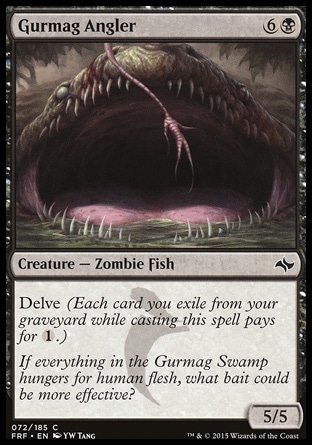
This, to me, is what makes Tarmogoyf a better threat than some of the other cards we can play that are more powerful and abuse the graveyard more. Specifically, I'm talking about Tasigur and Gurmag Angler, but to a lesser extent Bedlam Reveler and some others. Tarmogoyf puts the opponent in an awkward situation while sideboarding - is it worth it to board in Rest in Peace if Tarmogoyf is the only card it hits? Sometimes they will board it in and you won't draw the Tarmogoyf. Sometimes you will draw it, so you take it with discard spells and move on with your life.

Against graveyard hate, Tasigur, Gurmag Angler, and Bedlam Reveler all do at least something, while Goyf is a 0/1, and sometimes that can make a big difference. However, Goyf needs no Faithless Looting, no Street Wraiths, no Thought Scours to get going - those cards don't need to be present in order to run Tarmogoyf in your deck. That means that, while Tarmogoyf is hit hard by a Rest in Peace, the rest of your deck is usually just fine, which makes it less likely (or good) for your opponent to bring in their graveyard hate. Not only does Gurmag Angler suffer from a Rest in Peace, the entire deck needed to maximize Gurmag Angler will suffer from that same Rest in Peace. And again, if it looks like it'll be good against you, you still have the safety valve of discard spells. This is in addition to the fact that it's easy to just be unable to cast a Gurmag Angler because you didn't draw its enablers or they were Thoughtseized or countered, which doesn't really happen with Tarmogoyf, since its enabler is Magic the Gathering.

Conclusion

You may be wondering, "why is this guy talking about the most ubiquitous card in Jund?" Well, there are two reasons. One is that, from its surface, Tarmogoyf actually looks a little out of place in Jund. It's a creature that just attacks and blocks. It's an automatic four-of, but there are no other cards like it in the deck. No Wild Nacatls, no Loxodon Smiters, no Watchwolf. Its inclusion isn't beyond question, because as deck tuners, no cards' inclusion should be without question, that's what leads to innovation. So, this is a rundown of the card for newer players who are maybe (rightfully) curious about its status in the deck and in the format. It's important to examine that.

Additionally, I plan on really covering everything Jund in this blog over time. Sometimes it's more relevant to the moment stuff, sometimes it's just my tournament results so that I (and maybe you) can hopefully learn from them, sometimes it's big theory stuff like this. My goal is to make us all better, you and me, and one of the ways to do that is really examine Jund and Magic as a whole from the ground up. Look for more of these in the future. If you like this, harass me on Twitter at @griffinzoth and post idiotic comments on my videos at here.

 Thanks for reading! Wish me and my squad good luck this weekend in Worcester.

Sunday, June 3, 2018

SCG Regionals Debrief

I recorded an audio blog session on the way to and from SCG Regionals yesterday, and let's just say, trying to stay awake while driving through the foggy White Mountains didn't turn out to be the most cohesive place for drawing conclusions before and after a big tournament. I'd rather spare you all from listening to me ramble and just post a nice, cohesive write-up.

I posted this list in the previous post, with notable changes of late being a switch from Tireless Tracker to Courser of Kruphix, adding a second Dreadbore, and switching an Obstinate Baloth to a Kitchen Finks.

I felt reasonably confident going in. The deck had performed well in testing as of late, and I had good results at the previous two Modern Regionals tournaments I'd played in. But, it's Modern, so there's always a chance that you'll just run into wild off-the-wall decks or the all-in decks will hit their nut draw against you.

To keep y'all from dying of the suspense, I ended the day 6-3, outside of the money.

In the first round, I played against Infect. Modern is like that, decks that have fallen out of favor still have their proponents and are still dangerous. Luckily I had Bitterblossom in game one and was able to pick apart their hand in game two.

In round two I played against Eldrazi Tron. I took the first, can't exactly remember how. In the second, my opponent was able to hold on just long enough to get a Wurmcoil Engine down without Tron and take over. In the third, I had a solid advantage with Bitterblossom going, but a topdecked Reality Smasher on the right turn took me down. My opponent noted that it's a tough matchup for me and that it's his best matchup, which left me thinking that Eldrazi Tron must be pretty bad, since the matchup feels completely winnable on the Jund side.

In round three I played against Ponza. I Inquisitioned a Blood Moon, then took over with Goyfs and Huntmaster. In game two, my opponent mulliganed twice and I was able to squeak by a rough matchup.

I played Jeskai in round four. One of the big problems with the matchup is that your mulligan decisions are so poorly informed for game one. I kept perfectly keepable hand in the dark that featured a Fatal Push and a Bolt, and when my opponent played a turn one Steam Vents, I realized I had just mulliganned to five. I fought on and was actually pretty close in the first, but I won both sideboard games, mostly due to removing all the removal spells and filling the gaps with actual cards. Big test number one, passed.

I played against Normal Tron in the next round. In the first, I was handily defeated as expected. Game one is similar to the Jeskai matchup I just talked about, but the game is still pretty winnable since your discard can sometimes knock them off balance just enough to sneak through a win. I won the second due my opponent missing land drops for pretty much the whole game after a mull to five. Even if they had lands, they would have only add 1 colorless anyways due to my Damping Sphere. In game three, I used discard to get my opponent to finally get rid of both Nature's Claim in their hand so I could safely land my Damping Sphere, and just when I did, they drew their last copy they had boarded in. I was actually still in good position after fighting through a Karn and a Wurmcoil, but lost to a topdecked Ulamog on the last possible turn. A rough loss for sure, but one that I probably would have taken on the back of Damping Sphere most of the time, so +1 for the Sphere.

In round six I faced Merfolk. Weird as it sounds, I've had a history of losing to Merfolk, despite it seeming like exactly what you want to see as Jund. The problem is their Spreading Seas, one is bad but two of them can often shut you out of a game. You can fetch aggressively to play around them, but Merfolk pressure your life total so it's not always an option. Spreading Seas was not the problem in game one, my never-drawing-a-spell situation was the problem. I won game two after a dope Jund Charm to Plague Wind my opponent's board. Game three was really tight, but I eventually got into a stalemate with my opponent while making a bunch of Bitterblossom tokens staving off attackers while without red mana. Lots of draw steps went by without me drawing anything castable until I finally found a red source, and just in time, since my opponent then found a Master of the Pearl Trident and tried to attack me for lethal, which I exploded during combat with removal spells. Huntmaster was clutch again.

In round seven I played against Burn. I thought that I had game one wrapped up by curving Courser into Huntmaster, but I ended up being unable to race my opponent's three topdecked Boros Charms in a row. In both games two and three, I was able to pick apart my opponent's hand a little bit, but the game slowed down due to Ensnaring Bridge, and in both games, after some lifegain effects helping me stave off their library, I peeled a Kolaghan's Command to attack for lethal. I understand the Ensnaring Bridge plan, but I'm not exactly sure it's what I'd want to be doing in the matchup. When I play Burn, I don't play Bridge. I don't like stuff that isn't either an unanswerable knockout blow or is able to deal damage, and Bridge is plenty answerable.

I faced off against Eldrazi Tron again in round eight. This time, I picked up a quick game one after snagging a Map with discard and stranding my opponent on lands. Game two was a long, drawn out affair, but I was able to slow my opponent down long enough to take over with Huntmaster and removal spells for their big dudes. I was wondering if Damping Sphere was worth bringing in for this matchup, but it proved to be pretty solid. Slowing down a Smasher or Thought-Knot Seer by a single turn doesn't sound that great, but it slows down their explosive hands and gives you enough time to gain an advantage from your value-generators.

At 6-2 and fighting for a spot in the Top 32, I was paired against Jeskai. I was actually on pace to win game one with an early Bitterblossom, until my opponent drew a Bolt and then a Secure the Wastes to kill me. Game two was all about Search for Azcanta. I Inquisitioned one on the first turn, but my opponent found another one quickly and it took over. Thus, I finished outside of the money at 6-3.

The deck was good, but there were a few things that I think really could have changed things.

One was that Huntmaster was amazing all day and I could have used a third. I'm thinking in the future about taking out a Terminate for a Huntmaster, which sounds good in theory but might raise the curve more than I like. Huntmaster is great in all the matchups where Terminate is, and in some where it's not good too. Huntamster is awesome.

Scavenging Ooze was only okay. Life gain is solid, and given time it can grow to a pretty good size, but opponents either aren't letting you do that because they can remove it whenever they want, or they are out-tempo'ing you, in which case Ooze is actual Grizzly Bears. The insurance it gives you over Dredge and Hollow One and Griselbrand is really good, but I didn't face any of those, so I just had an unspectacular dork. It's not necessarily that Ooze is bad, it's that it's not as good as I wish it was, and your threats in a Jeskai-dominant world need to be high-impact. Note: Scavenging Ooze has never in a million years stopped a Snapcaster Mage or Search for Azcanta from doing whatever it wanted, so no, it has no utility in that matchup other than attacking for maybe 3.

Seven is a good number for discard spells. I don't think I would want fewer. They are always good in your opener, ideally you'll have at least one in every hand for game one.

Jeskai adds a new wrinkle to the format. The matchup isn't about hitting the cards that are good against them, it's about how few dead cards and excess lands you can draw, quantity over quality. The mirror match is similar to this, but your everyday removal spells are not only live but are some of the best cards in the matchup. Ooze also sucks, rather than being a valuable threat. It's going to be a tough ask to structure the deck in a way that we aren't inherently disadvantaged against Jeskai but can still have game against the format. If my tournament is any indication, two Jeskai opponents out of nine isn't really enough to go tearing the list apart over, but it could help out a lot there to re-examine things.

Also, and this is crazy but I want to try it: maybe we're supposed to choose to draw against Jeskai? I know that sounds criminal, but the number of times you actually tempo them out are so few and far between. It doesn't matter when your Bitterblossom hits play, so long as it actually does at some point (preferably early). You still have time to strip their Search for Azcanta before they land it on turn two. The game is such a card advantage slog, and their removal is so cheap that you can't out-tempo them ever even if you have a great start. Bitterblossom coming down before their Logic Knots are live is probably the determining factor, but I think it's a theory worth trying.

If I know me, I'll spend several hours searching Gatherer and then finally cut one Scavenging Ooze for a Grim Flayer and then add a Huntmaster to my sideboard, but you never know until you try. I'll let you know what the next step is the next time I post here. Thanks for reading!

Tuesday, May 29, 2018

Locking It In

Star City Regionals isn't the hugest tournament in the world, but it's pretty big, it's local, and it's Modern, so it's what I've had my sights on for a little while now. I also was pretty happy with my results in the two instances of this tournament last year, finishing in 4th and 9th with almost identical Bitterblossom Jund lists. A lot has changed since November of last year in Modern, but running it back seems to be a pretty good bet. I'm excited.

This is the 75 that I'm going to play at Regionals.

4 Tarmogoyf
3 Scavenging Ooze
2 Courser of Kruphix
2 Huntmaster of the Fells
3 Bitterblossom
1 Grim Lavamancer

4 Inquisition of Kozilek
3 Thoughtseize
2 Fatal Push
3 Lightning Bolt
2 Dreadbore
1 Terminate
4 Liliana of the Veil
3 Kolaghan's Command

4 Verdant Catacombs
4 Bloodstained Mire
1 Wooded Foothills
1 Blood Crypt
2 Overgrown Tomb
1 Stomping Ground
1 Blackcleave Cliffs
2 Blooming Marsh
2 Raging Ravine
1 Hissing Quagmire
2 Swamp
1 Forest
1 Mountain

Sideboard:
2 Duress
2 Blightning
2 Obstinate Baloth
1 Murderous Cut
1 Kitchen Finks
1 Jund Charm
1 Pyroclasm
1 Engineered Explosives
2 Nihil Spellbomb
2 Damping Sphere

You can follow my progression with this deck over at my Youtube channel.

We've been over why we have Bitterblossom, and why we have no Bloodbraid Elf, I'll focus on some of the more interesting card choices. Also, check out this list from this weekend's Star City Open. 15 creatures, none of which are Bloodbraid Elf or Dark Confidant. Maybe we are actually on to something here.

Pyroclasm and Jund Charm are some interesting ones. Between these two, Radiant Flames, Anger of the Gods, you have a lot of cards that do similar things and are pretty interchangeable, so it's nice to have some diversity to play around Meddling Mage. The idea is that you pick off small creatures with the sweepers and use the rest of your removal to hit the big ones like Mantis Riders, overgrown Champions of the Parish, etc. Pyroclasm costing 2 mana is a huge selling point, since most of the decks it's good against have creatures that grow over time. Killing a 2-toughness creature before it gets to 3-toughness is equally as good as killing a 3-toughness creature. Jund Charm is another one that I'm excited about, it being an instant turns it into a Plague Wind that also counters Collected Company (in my fantasy dreamworld). The fact that Jund Charm is the stone cold against Storm is also nice, since it counters Past in Flames and wipes up Empty the Warrens tokens.

I have been in love with Damping Sphere lately. It is a somewhat narrow card, but it just so happens that the decks it is good against are the ones where you need lots of help, and also that it punishes those decks hard. Some decks like Storm or Amulet are just stopped in their tracks.

I've been a proponent of a three-of Kolaghan's Command for a while, ever since I saw Joe Bernal top 8 an Invitational with four in his Jund deck. I found four to be a little clunky, but Kolaghan's Command is the closest thing to Liliana of the Veil five-through-seven as we're going to get. It's disruptive, it's card advantage, and can even be tempo advantage when you two-for-one two cards on the board against something like Affinity or Hollow One. I have extra copies where other lists I've seen have Maelstrom Pulse or Liliana the Last Hope. These are fine cards, and noteworthy for their versatility, but I've found them to be even less versatile than Kolaghan's Command. Some cards are consistent and "never your best card but always okay," where Kolaghan's Command is "Often your best card and still always okay."

Ooze is not my favorite threat to back up Tarmogoyf, but I've seen a steady increase in decks that use the graveyard. Not just Dredge, but Hollow One, Griselbrand, Storm, and others have made me put away my Grim Flayers and run the Oozes. Also, Ooze plays pretty good cleanup duty against Humans, which is enemy number one right now. It's a card that I'm willing to variate from stock lists with, but I think right now is a good time for Ooze.

I recently had three Obstinate Baloths in the sideboard, but switched one out for a Kitchen Finks. Finks is good in a lot of matchups, most notably it's somewhere between okay and good against the new Jeskai Control deck. Since we have Courser of Kruphix in the deck, the 1GG mana cost isn't as much of a negative as it otherwise would have been, since you're still fetching with getting double-green in mind. I still really just want to live the Obstinate Baloth dream, though, and get that thing into play via Burning Inquiry. I've found that the matchup there is pretty favorable, so I'm willing to shave a Baloth for some help elsewhere, especially when Finks serves a lot of the same purposes. 

I'm on a 2-1 Dreadbore/Terminate split at the moment. Dreadbore is a little bit clunky, so I don't think I want too many of them, and the effect is good enough to warrant the Terminate. However, I'm a little scared of Teferi, and there are other targets where Dreadbore is quite a lot better as well, including Karn, Ugin, Lilianas, Gideons, etc. Terminate is clearly better in the face of Mantis Rider and creature-lands, but Terminate is a near dead card in lots of matchups where Dreadbore has a lot of utility, and it's not true the other way around.

Hissing Quagmire and Blooming Marsh are a couple of lands that are new and are usually overshadowed, but they've been pretty solid for me. Without any double-red cards in the deck, a single fetchland should let you cast everything in the deck.

Always play one Mountain.

One of the reasons I like the Bloodbraid-less list is that it makes your discard spells much better, or rather, you can play more discard spells without worrying about powering down your Bloodbraids. After the unbanning, lists often had just three or four discard spells, but I really don't like that. The hand disruption is one of the best things about playing a deck like this in the first place. It's also a pretty sweet spot where you have enough cards to bring in to replace them in the mirror, and also not so many Thoughtseizes that you can't replace those when your life total matters. You'll note the Duresses in the sideboard that are there when I want even more of this effect, and I've been pleased.

When Fatal Push was printed, I was a 4-Bolt 4-Push guy and loved it. The metagame has adjusted quite a bit, and good Fatal Push targets are few and far between. The only matchup these days where Bolt is worse than Push is the mirror match, but having a few of each is good for Meddling Mage concerns. Replacing one of the cheap removal slots for Grim Lavamancer has been pretty solid as well, as it gives the deck another proactive one-mana play on turn one.

So that's where I'm at. Thanks for reading, wish me luck, and stay tuned. After this weekend, I'll write about my experiences at Regionals. I might be setting myself up for disappointment, but I feel pretty good.

Monday, May 21, 2018

The Sideboard Toolbox

One of the reasons why I love Modern so much is the diversity of the metagame. There are always going to be the usual suspects of top decks for a given weekend, but there's never a guarantee that you'll see the decks you expect the most of, since so many things are viable. Even if there's a set few top decks currently, people will play anything and can be successful with them, so there are a million things to prepare for. That's where having a good sideboard comes in handy, and why Jund is awesome.

Today I'm going to run down all the different Jund cards that I like to use in sideboards. This isn't a list of what my sideboard is right now, it'll be more of a list of cards that I like to have access to, and by that I mean own, that I have practice with and can register for an event when I feel like it. It's not only important to have these cards (and potentially other cards that you might like) but to have used them in the past so you know how to play with them, and how to build your sideboard correctly in order to utilize them. Also, certain cards are going to fit in better with your maindeck plan depending on your exact list at a given time, so it's good to have lots of tricks up your sleeve.


Grim Lavamancer, Shadow Guildmage

Lavadude is one of the go-to anti-creature cards in Jund. It cleans up opposing Birds and Hierarchs, Affinity creatures, Humans, Glistener Elves, lots of stuff like that. Shadow Guildmage is another card that fills the same role, but has fewer applicable targets and can't turn onto your opponent's face as well as Lavamancer. However, Guildmage doesn't depend on your graveyard and is repeatable as often as you want, which is useful not only because you are free to use it more indiscriminately, but post-board opponents are more likely to have graveyard hate for you. Shadow Guildmage is more of a surgical strike when you know Affinity and Noble Hierarch decks will be popular, Grim Lavamancer is worse in those matchups but better across the board and has more applications. And while Lavamancer is reasonable but not great against Burn, Guildmage is a complete blank. Also, (and this is a theme with this deck to watch out for) be careful of utilizing the graveyard too much, since Lavamancer can run out of food quickly if played in the same deck as Tasigurs, Murderous Cuts, or other graveyard-matters cards.


Anger of the Gods, Pyroclasm, Jund Charm, Kozilek's Return

As opposed to the machine-gun-your-squad approach from Lavamancer and Guildmage, these cards look to Plague Wind your opponent's board. That comes with its own set of advantages and disadvantages, but most notably they are better on the draw and against Bogles. They are definitely worse when you have your own Dark Confidants or Faerie Rogue tokens hanging out, but you can plan accordingly when you know they are coming. Of these, Anger of the Gods is the most powerful, since it hits Dredge and Kitchen Finks pretty effectively. Pyroclasm is fantastic at catching you up since you can cast it on turn two, and it will usually kill Champion of the Parish before it gets out of control. Jund Charm and Kozilek's Return being an instant are pretty cool, though the only upgrade I can see for Return over Charm is to kill an Etched Champion. Jund Charm is genius against Storm because it hits their Past in Flames and their Empty the Warrens tokens.


Fulminator Mage, Blood Moon, Ghost Quarter, Damping Sphere

Big mana decks are the enemy, so having some land hate is key. Fulminator Mage is solid, but never a knockout blow against anything, just an annoyance. The same is true for Ghost Quarter, but it misses out on any of Fulminator's advantages with Kolaghan's Command and Liliana the Last Hope. Blood Moon is quite good against Tron and lights-out against Valakut and Amulet Titan. It's also solid in some other matchups when opponents don't expect it, including Bogles and Abzan. The problem is that it hurts you significantly, and if you are running the Blood Moon plan, you'll have to set your whole 75 up accordingly. Sometimes it's worth it, sometimes not. Damping Sphere has been a godsend, since it nukes Tron, Amulet, and some other problems like Storm and Griselbrand. It doesn't do anything against Valakut, however, so you'll need a different plan against them (or just try and win without the hate, which of the big mana decks, is the most susceptible to normal disruption + a clock Magic).


Ancient Grudge, Nature's Claim, Seal of Primordium, Deglamer

These kinds of cards are useful, but not always super important. I used to like having Nature's Claim and Seal of Primordium to fight Splinter Twin, but that's certainly not a problem anymore. However, Leyline of Sanctity is still a problem for you in lots of matchups, and these are always useful against Affinity and Lantern. Deglamer can handle Wurmcoil Engine, so that's cool, but Wurmcoil isn't even that numerous in Tron these days. They all can also tag a Blood Moon in a pinch. Ancient Grudge, while being unable to hit enchantments, is of course extremely powerful. In fact, just having a copy in your 75 makes your Lantern matchup much, much better, since you don't even need to draw it for it to be good.


Duress, Extra Thoughtseizes, Collective Brutality

There are matchups where your spot discard is awful, and there are matchups where your spot discard is the only thing keeping you in the game. One or two more discard spells can help a lot, I like to be able to go up to 8 or 9 against Combo and Control decks. Since those are the decks you want the discard for the most, it makes sense that you can slot in Duress, but Snapcaster Mage is the most important card to hit in the Control matchups, and it noticeably misses there. However, your other 6 or 7 discard spells will snag the Snapcaster, and extra Thoughtseizes are awful against Burn, where you discard is actually pretty solid. As for Collective Brutality, I'm certainly in the minority, but I've just never liked it. I hate missing with the discard effect, the life drain is just small enough to be inconsequential lots of times, and a sorcery speed two-mana disfigure hits a lot fewer creatures than you would think when those creatures already have a Kolaghan's Command waiting for them.


Engineered Explosives, Damnation, Gaze of Granite

These two cards could go in the Anger of the Gods section, but they are kind of a different animal. They are more expensive and generally more powerful effects, but kinda unwieldy. Explosives has always been great for me, since it is useful against a huge amount of matchups, including the dangerous Bogles deck. It's a great answer to Etched Champion and other stuff that is specifically hard to interact with. Damnation has few applications where it's better than a Pyroclasm effect, since if you aren't getting swarmed, you are most likely winning on the board with the biggest creatures. If you're getting your Reality Smashed a lot, then this looks a little better. Gaze of Granite is kinda the best of both worlds, hitting only the creatures and permanents you want, but all of them. However, it's way too expensive for a lot of the quicker decks in the format, so in matchups where you'd most need it, lots of times you are getting run out of the gym or not drawing your lands on time for it to work.


Blightning, Liliana the Last Hope, Painful Truths, Planeswalkers

Depending on the shape of the metagame, there might be times where you're looking for a little more value to power through some matchups. Of these, what I like about Blightning is that it counts as a disruption spell against Combo decks while still giving you a two- or three-for-one. It clocks the opponent in a combo matchup, or it can nuke a Planeswalker from a midrange mirror, all while taking out pieces of cardboard from your opponent's hand. Yes, they get to choose the two cards, but you are either attacking their resources in the midst of an attrition battle, or you're attacking their hand with your other discard spells, reducing their options and lots of times just making them get rid of the last two cards they have. Painful Truths is of course a nombo with Bloodbraid Elf and a huge tempo loss, but Planeswalkers are solid and extremely versatile. Chandra, Torch of Defiance, Garruk Relentless, Chandra Pyromaster, and even Garruk Wildspeaker can do work in the right matchup.


Obstinate Baloth, Kitchen Finks, Huntmaster of the Fells

These are my go-to value animals to bring in against Control decks, Burn decks, and the mirror match or other attrition matchups. Each of them are solid for their own reasons, but basically I try and figure out what decks I expect the most and figure out which of these to play. Finks is the best against Burn, Baloth is the best against the mirror, and Huntmaster is best against Control. Huntmaster is also a fine maindeck card, whereas the other two here are sideboard only. If you don't expect any Blue and White control decks, then Baloth is the best, and is even good against Hollow One and The Rack. But it doesn't do anything about Celestial Colonnade decks, while Huntmaster and Finks are fantastic there.

My plan over the years has been to play at least three or four of these creatures, since the matchups where you want them are the kinds of matchups where you have large swaths of cards to take out. You want to take out all the discard in the mirror, you want no removal against control, and you want no life-loss inducing cards against Burn, so if you can set your deck up to replace all of those cards post-board you'll be doing great.


Grafdigger's Cage, Nihil Spellbomb, Leyline of the Void, extra Scavenging Oozes

Jund runs just enough of its own graveyard utilization to make Relic of Progenitus and Rest in Peace (if you are bold enough for a white splash) pretty poor. However, these other cards are fantastic against graveyard decks.

Grafdigger's Cage is pretty much lights out against Dredge, and helps a lot against Storm and Griselfbrand, but for some weird reason with the rules, it doesn't interact at all with the card Living End, so it's useless there. However, it does turn off Collected Company and Chord of Calling, so if those decks are popping up, Grafdigger's Cage might be your go-to graveyard hate.

Nihil Spellbomb actually removes the whole yard, which is awesome against stuff like Gurmag Angler and Kolaghan's Command rebuys, but worse since it is a one-time effect, then the opponent can reload their yard. Drawing a card makes this card a lot more palatable in various midrange matchups, where it's useful but doesn't cost you anything to play it. I like it against stuff like Grixis Death's Shadow where they utilize their graveyard but not enough so that I want really want to spend resources attacking it.

Leyline of the Void runs the same problem as any other Leyline card, where it's fantastic in your opener but sucks if you draw it later. It does, however, totally KO most graveyard decks on turn 0 of the game, which is nice. I like it less than Spellbomb most of the time because it has fewer applications and is a worse topdeck.

Throwing an extra Scavenging Ooze in your sideboard isn't the worst idea, especially if you're looking for another one of the Kitchen Finks/Obstinate Baloth effects. It's much slower and therefore less reliable against graveyard strategies, but when backed up by a discard spell or two, you will usually have time to make use of it.


Extra Maelstrom Pulse, Abrupt Decay, Fatal Push, Murderous Cut, etc

I don't usually like loading up the sideboard with versatility, since that's what the maindeck is for, but these can be okay to round out the numbers post-board. I always just feel like I can do better with my sideboard slots, but it's not the worse plan to have trusty old Maelstrom Pulse around to have your back. Currently, enemies number 1 and 1A in Modern are Humans and Hollow One, so to round out the deck a little I've been slotting in a single Murderous Cut. It's never amazing but always solid in the matchups where I want it, and versatile enough to come in and do work against a bunch of stuff. It's not typically the role of your sideboard cards, but you just kinda should do what feels good.

And I guess that's the whole idea behind Jund, really, is get in your reps, experiment a lot, and figure out what works for you. You're going to want to be able to be flexible and switch up your sideboard and whole 75 when a new deck comes along or gains popularity. Metagames shift, card selections evolve, the strategy is timeless, not just in-game, but as a concept for Magic as a whole. Identify threats, utilize research, clock and disruption, win tournaments, Jund for life, let's go.

If you'd like to see some Jund in action, check out my YouTube channel or follow me on Twitter. Sometimes, you can even catch me streaming on Twitch. Thanks for reading!

Saturday, May 5, 2018

Youtube Channel and Burninating the Countryside

I started a Youtube Channel!


You'll note that one of the videos that's up already is me playing Burn. Plus, I played Burn at the Grand Prix a while back. What gives, Jund dude? Let me explain.

Modern is an eternal format, which means it doesn't rotate. New cards enter the format all the time, but unless something gets banned, they don't leave. Decks that exist now have existed forever, and unless something gets banned, you can just play your deck at every Modern tournament from now until they stop running Modern tournaments.

In eternal formats, a great strategy is to master a single deck. Hopefully, you choose something that's versatile and consistent, and not subject to potential bannings. That way, you will always have the option to play a deck that you are comfortable with, and even if a scenario arises where you think to yourself "I should play Deck X because it's really good right now, even if I'm not familiar with it," that's fine, but having the option to play a deck you're a master of is really rewarding.

Modern is a skill testing format in a variety of different ways. First, the games are quick and mistakes are punished brutally, so normal gameplay ability is important. Secondly, it's a vast format with a pretty significantly long history at this point, so your opponent could be showing up with one of a huge variety of viable decks, and it's important to know not only how their deck works, but how your deck and their deck match up against each other. Third, is that since Modern is a format that is constantly being stirred up, a backlog of cards that you have tried out for various metagame scenarios is invaluable. When Humans gets a sweet land printed and now the format's number one deck is a 40-creature aggro deck, I've played Grim Lavamancer and Engineered Explosives in the past, so I know it's the right time to put those back in my list. These little decklist changes for a given event can be crucial and are often the difference between a good and a great tournament.

I've been playing Jund almost exclusively since Modern was created (with a short hiatus to cast Treasure Cruise). It's a great deck for Modern, not necessarily because it is versatile, has few unwinnable matchups, and rewards tight play and format knowledge. Also, I can just about guarantee that I've played more matchups with Jund than my opponents have with their deck if their deck was created in the last few months and they're just playing it as a metagame choice.

So why Burn? Well, the answer is that, for all of these same reasons, I like to have one specific backup deck. Even a deck as bad-matchup-proof as Jund just isn't worth it. These days, that could be because the format is based around Tron and Dredge, stuff that is perfectly beatable with my main, but tough (I'm told "main" is a term that means the character you are most familiar with in fighting video games, and it's a pretty good word to use here). If I am expecting those kinds of shenanigans, then I can press on, but it's an uphill battle, so changing gears for a weekend is a totally reasonable thing to do, so long as I am experienced with the deck and all of the above deck-selection process criteria are still true.

The reason I like Burn specifically, is that it has a lot of the same advantages as Jund but different specific favorable and unfavorable matchups. You still get to sport a robust sideboard, your deck is consistent and straightforward, and there are a huge swath of cards in the Modern format that you can use to your advantage that fit the deck and you can use to attack a given weekend. Matchups like Tron and Jund are way better with Burn that with Jund, but stuff like control decks and the mirror I like a lot better with Jund. If I expect to see Jund and Burn in the format since everyone in the world read this blog post, I'd roll with Jund. I talked about how I've been playing Jund forever, but even before Modern was a thing, I played Kird Ape at every single Extended tournament that it was legal. So basically, I've been only playing two decks for 16 years. Why change if it's still working out?

Hope you check out the Youtube page, and I hope you like it! I'll keep adding to it, and try to get back onto the streaming train too. Thanks for reading, see ya later!